
When Does a Mini DC Motor Customization Require Revalidation?
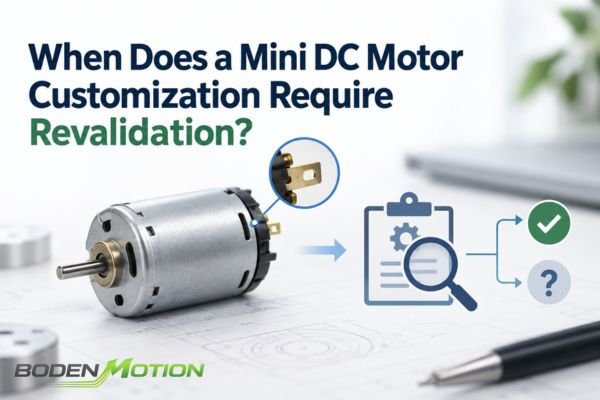
A mini DC motor customization requires revalidation when the change can affect a previously validated function, material property, interface, design assumption, or application risk. Whether the starting point is a standard DC motor or an existing OEM design, the key question is whether the original validation evidence still represents the modified configuration. Revalidation does not […]
How Axial and Radial Loads Affect Micro Coreless Motor Bearings?
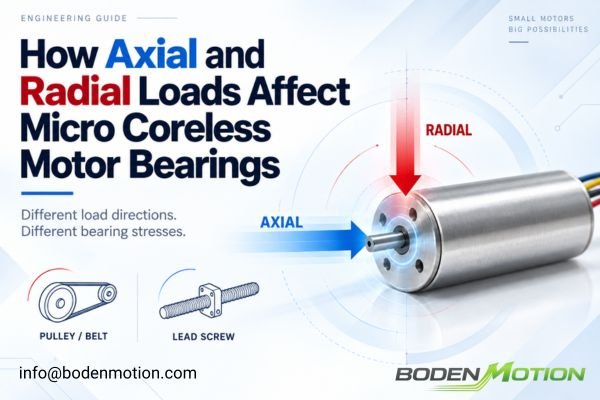
In mechanically demanding applications, a micro coreless motor can fail prematurely even when operating well within its electrical limits. In these cases, the bearing system, not the winding, can become the critical failure point. External forces from pulleys, gears, and lead screws are transmitted through the motor shaft into the bearing system. If not properly […]
Brushless DC Motor Torque Constant vs Speed Constant: How Kt and Kv Relate
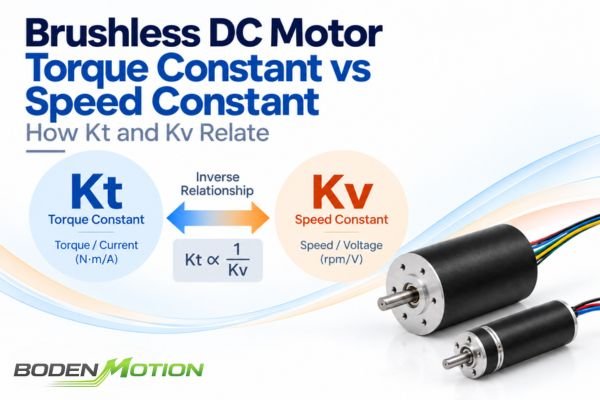
Motor constants like the torque constant (Kt) and speed constant (Kv) are often misinterpreted, which can lead to suboptimal motor selection. They don’t define a motor’s power, but rather how a specific DC motor winding converts electrical energy into mechanical motion. The torque constant (Kt) and speed constant (Kv) of a brushless DC motor are […]
What Test Data Should a DC Motor Supplier Provide With Samples?
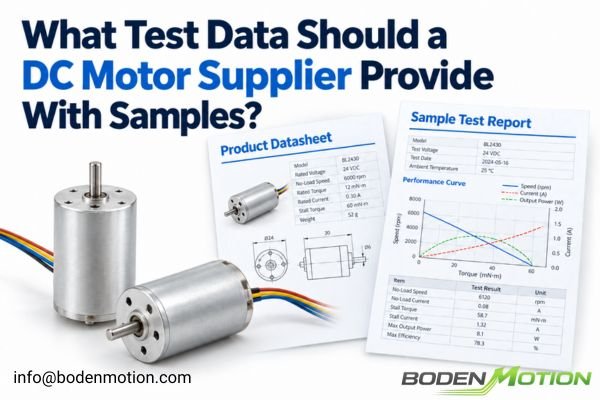
When an OEM receives DC motor samples, a standard datasheet is useful, but it’s rarely enough for proper engineering approval A datasheet describes the product family’s design intent; a sample test report should describe the actual measured performance of the specific units you receive. A datasheet defines a motor’s nominal characteristics, but it doesn’t tell […]
6mm vs 12mm vs 16mm Coreless Motors: How Engineers Choose the Right Size?
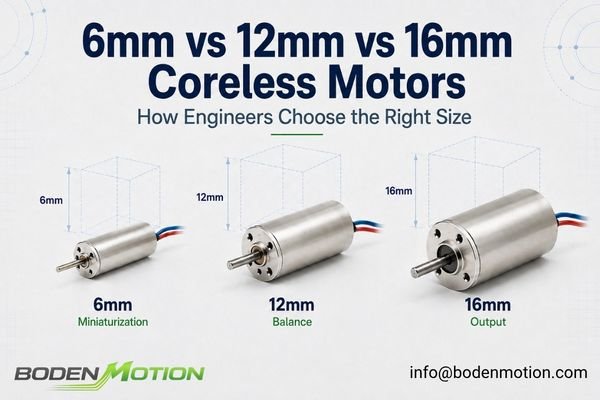
“Should I use a 6mm, 12mm, or 16mm coreless motor?” This is a common starting point for many OEM projects. But selecting a motor based on diameter alone often leads to integration problems. The final choice between a 6mm, 12mm, or 16mm coreless motor depends on the required torque, speed, load inertia, and thermal limits […]
How Current Limiting Protects a Coreless Brushless Motor During Startup?
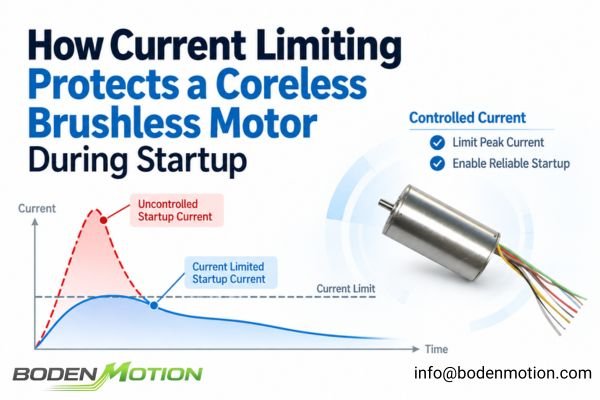
Startup protection for a coreless brushless motor is not just about setting a current ceiling; it’s a controlled energy-delivery problem. A coreless brushless motor’s startup current must be high enough to accelerate the load but low enough to avoid damaging the winding, driver, or power supply. Coreless brushless motors can respond very quickly due to […]
Small Diameter vs High Torque: The Real Trade-Off in Coreless Motors
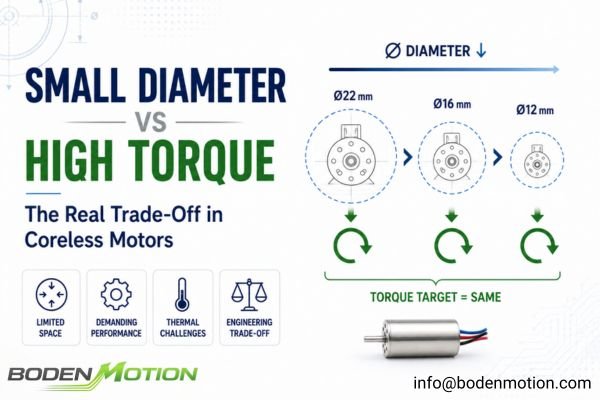
“Can you make the motor smaller but keep the same torque?” This is a frequent and understandable request in the world of compact OEM devices. A miniature coreless motor can produce high peak torque for short durations, but its continuous torque is fundamentally limited by thermal dissipation, creating a critical trade-off between size, sustained output, […]
How Winding Resistance Changes Coreless Motor Voltage, Current, and Speed?
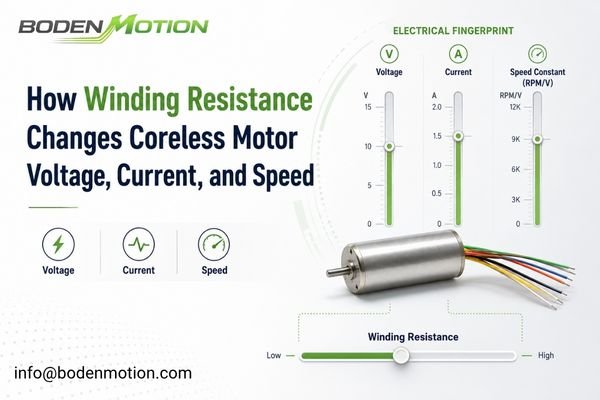
Two coreless motors with the same dimensions can behave very differently because their windings are different. This often leads to confusion and incorrect motor selection in OEM projects. Different voltage versions of the same coreless motor (e.g., 6V, 12V, 24V) have different winding resistances and motor constants, which fundamentally change their speed, current draw, and […]
How to Calculate BLDC Motor Mechanical Power From Torque and RPM?
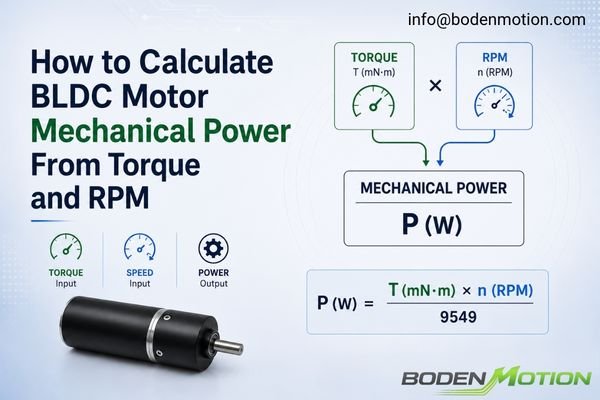
Your new project requires a motor with “10 mN·m torque and 15,000 RPM.” This seems clear, but these two numbers hide a critical third value: mechanical power, which dictates the true demand on the motor. To calculate BLDC motor mechanical power (in watts) from torque (in N·m) and speed (in RPM), use the formula: Power […]
Electrical vs Mechanical Time Constants in a Coreless DC Motor
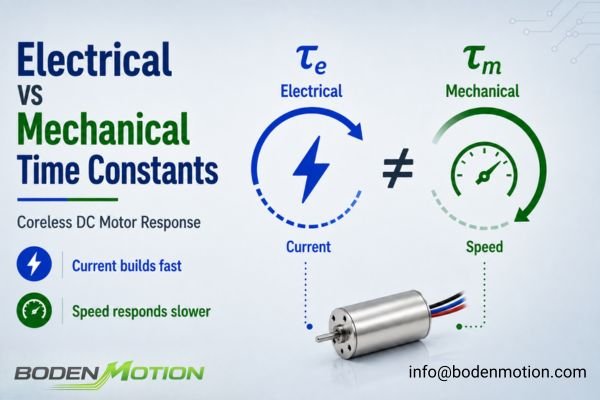
Engineers often select coreless DC motors for their “fast response,” but this term can be misleading. Current might rise quickly while the mechanical system still accelerates slowly, leading to unexpected performance issues. The reality is that a motor’s response involves at least two distinct dynamic time scales: the electrical time constant, which characterizes how quickly […]
Why Rated Speed Is Lower Than No-Load Speed in Brushless Motors?
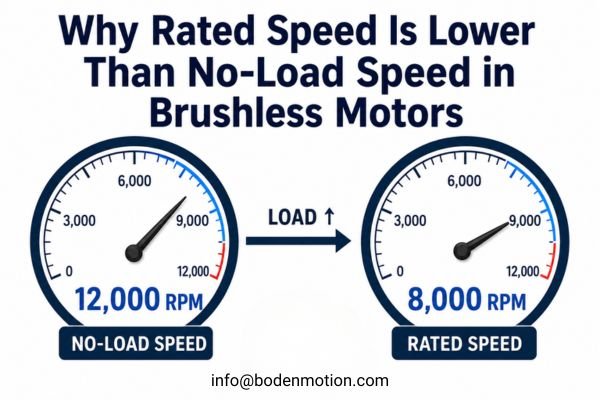
OEM buyers often see a high no-load RPM on a motor datasheet and expect similar performance in their equipment. This can lead to a frustrating gap between specification and real-world results. The reality is that rated speed is lower than no-load speed because the two values describe entirely different operating states. A motor under load […]
Why Continuous Torque in Hollow Cup Motors Is Usually a Thermal Limit?
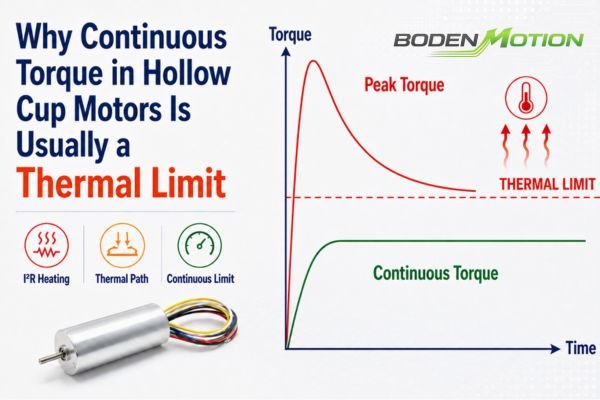
An OEM engineer selects a compact hollow cup motor with an impressive peak torque rating, but it fails to perform under continuous load. The motor gets hot, performance degrades, and the project hits a thermal roadblock. This common scenario arises from a fundamental engineering principle: peak torque is an electromagnetic question, but continuous torque is […]