
How to Test a Mini Brushless Motor With a Multimeter—and What the Test Cannot Prove?

When a miniature brushless DC (BLDC) motor fails to start, runs erratically, or triggers a controller fault, an engineer’s first instinct is often to reach for a digital multimeter. This versatile tool is excellent for initial troubleshooting, allowing for quick checks on the motor’s basic electrical integrity without needing complex test benches. A multimeter can […]
Why Custom BLDC Motor Unit Cost Changes From Prototype to Mass Production?

For OEM engineers and procurement managers developing a new product, one of the most common questions is why the unit price of a custom brushless DC (BLDC) motor can be dramatically different between the prototype and mass-production stages. A prototype may appear visually identical to the final production motor, but its cost structure is fundamentally […]
Why Equal Phase Resistance Matters When Testing a DC Brushless Motor?
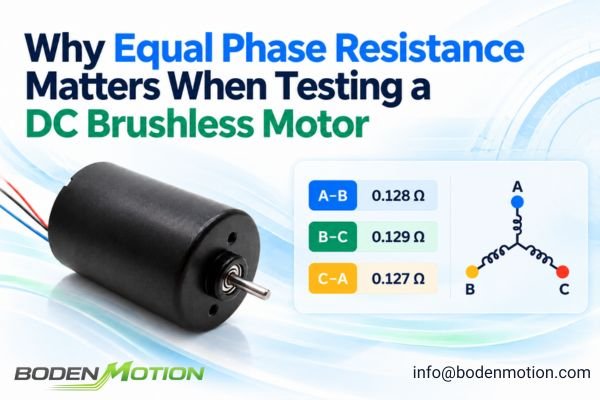
Phase resistance is a fundamental electrical parameter checked during brushless DC (BLDC) motor manufacturing and quality inspection. For a three-phase motor, engineers typically measure the resistance between three terminal pairs: A–B, B–C, and C–A. For a symmetrically designed winding, these readings are expected to be reasonably close. However, observing a small difference does not automatically […]
How to Specify Acceptable Vibration for a High-Speed BLDC Motor?
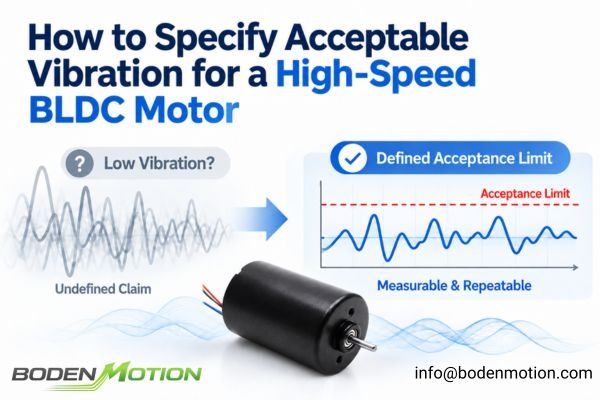
“Low vibration” is a common marketing phrase, but it is not an engineering specification. For any high-speed BLDC motor, excessive vibration can generate acoustic noise, increase bearing load, and degrade the performance of the equipment it’s installed in. A supplier’s claim of “low vibration” is insufficient for OEM qualification or quality control. A meaningful vibration […]
What Does an FG Signal Tell a Brushless Motor Controller?

An FG output seems simple, but it is only useful after its pulse definition and electrical interface are clearly understood. Many brushless motors with integrated drivers provide this signal, but receiving pulses does not automatically mean the controller knows the exact RPM. To convert an FG pulse train into reliable speed information, a brushless motor […]
Star vs Delta Winding in Miniature BLDC Motors?
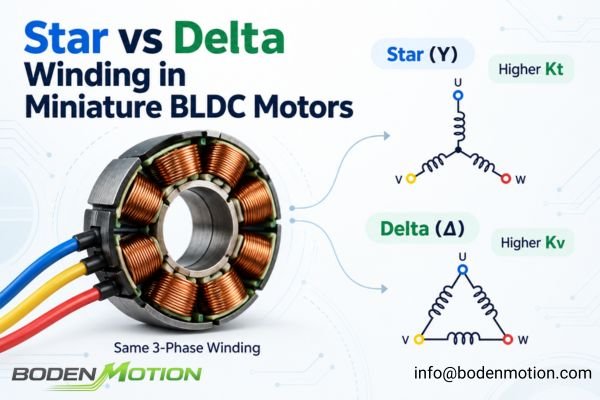
When selecting a three-phase miniature BLDC motor, engineers will encounter two primary winding configurations: Star (also known as Wye or Y) and Delta (Δ). A common rule of thumb is to associate Star with high torque and Delta with high speed. This rule can be a useful first approximation, but it becomes misleading when the […]
How Back EMF Sets the Speed and Torque Margin of a BLDC Motor?
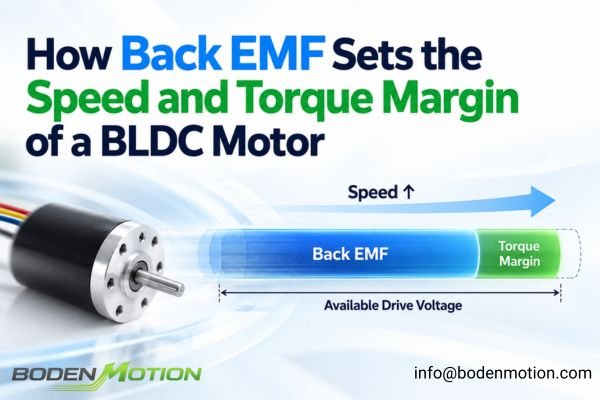
When selecting a brushless DC motor, engineers often focus on datasheet values like rated torque, peak torque, and maximum current. While critical, these parameters do not tell the whole story, especially for high-speed applications. At high rotational speeds, the motor’s performance may become limited not by its current rating, but by the voltage available from […]
Why a Single Efficiency Number Can Mislead Brushless Motor Selection?
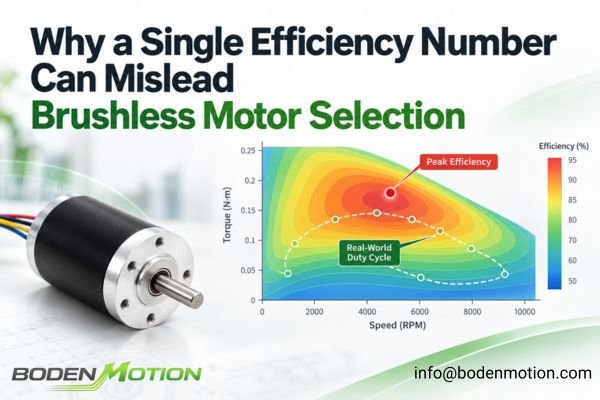
A brushless motor datasheet might advertise a peak efficiency of 85% or 90%. While this is a useful performance indicator at a specific operating point, relying on it alone for selection can lead to poor system performance, thermal issues, and shorter battery life. Peak efficiency is a single point on a map; a real-world application […]
Brushless DC Motor Torque Constant vs Speed Constant: How Kt and Kv Relate
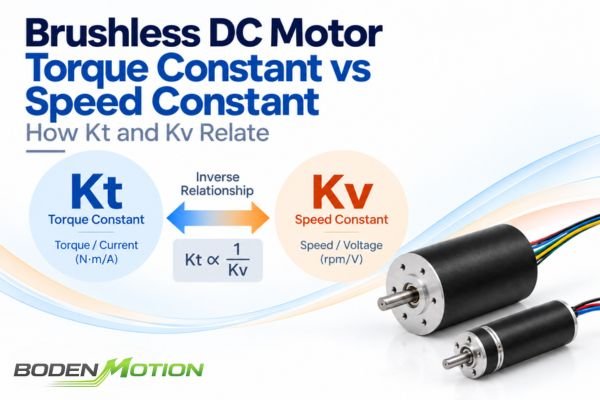
Motor constants like the torque constant (Kt) and speed constant (Kv) are often misinterpreted, which can lead to suboptimal motor selection. They don’t define a motor’s power, but rather how a specific DC motor winding converts electrical energy into mechanical motion. The torque constant (Kt) and speed constant (Kv) of a brushless DC motor are […]
Can You Connect a BLDC Motor Directly to a Battery ?
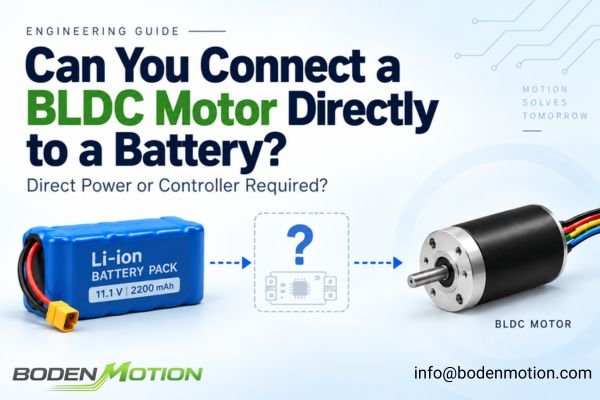
“Can you connect a BLDC motor directly to a battery?” It’s a simple question I hear a lot, especially from teams working on portable, battery-powered equipment. The answer depends first on whether the BLDC motor includes its own commutation electronics. A bare BLDC motor cannot run directly from a battery, while a motor with an […]
How to Calculate BLDC Motor Mechanical Power From Torque and RPM?
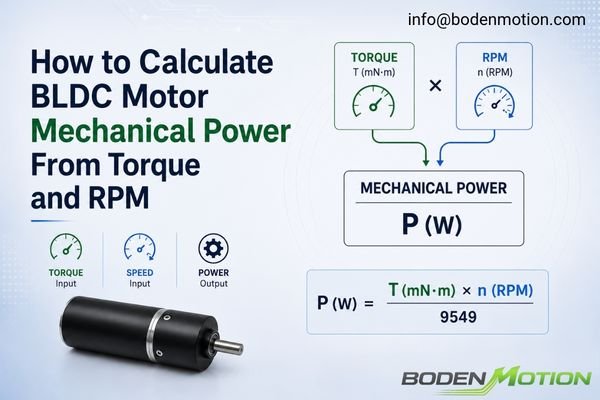
Your new project requires a motor with “10 mN·m torque and 15,000 RPM.” This seems clear, but these two numbers hide a critical third value: mechanical power, which dictates the true demand on the motor. To calculate BLDC motor mechanical power (in watts) from torque (in N·m) and speed (in RPM), use the formula: Power […]
Why Rated Speed Is Lower Than No-Load Speed in Brushless Motors?
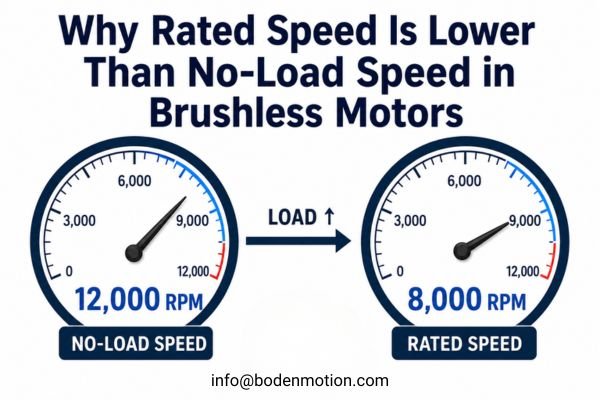
OEM buyers often see a high no-load RPM on a motor datasheet and expect similar performance in their equipment. This can lead to a frustrating gap between specification and real-world results. The reality is that rated speed is lower than no-load speed because the two values describe entirely different operating states. A motor under load […]