
No-Load Current vs Rated Current vs Stall Current in Brushless Motors
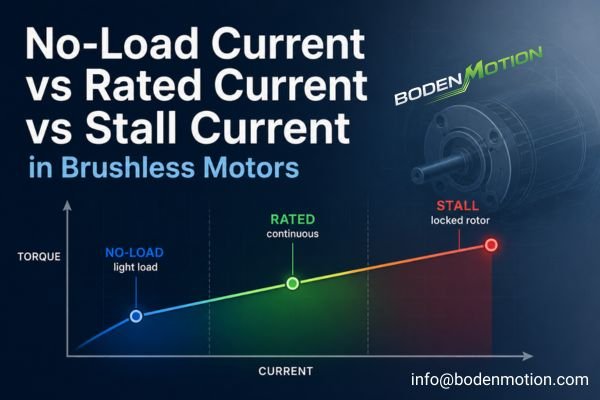
Misinterpreting a motor’s current ratings is a common engineering oversight that often leads to undersized drivers, unexpected thermal issues, or oversized, costly power systems. No-load, rated, and stall current are not just low, medium, and high values; they describe three different motor operating states—free-running, working under a specified continuous load, and being stopped under power—each […]
How Electronic Commutation Works in a BLDC Motor?
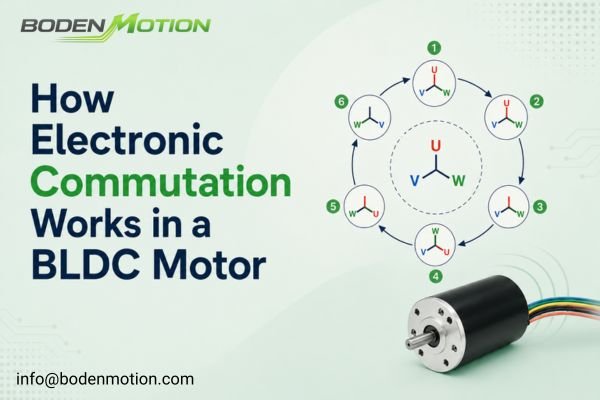
Your brushless motor isn’t starting reliably under load, and you suspect a fault. But “brushless” doesn’t mean “commutation-free”—it just means the switching is electronic, and that’s often where the problems hide. Electronic commutation in a BLDC motor uses a controller to switch current through the stator windings in a sequence that creates a rotating magnetic […]
How Many Wires Does a Brushless DC Motor Need? Power, Hall, PWM, FG, and Brake Signals Explained
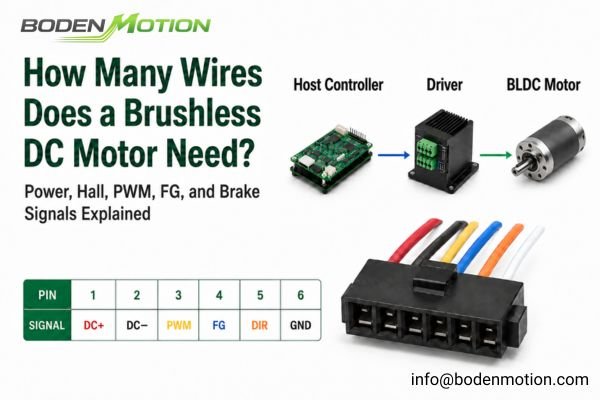
A brushless DC motor may use as few as three phase wires for basic operation, while a sensored version typically adds five Hall sensor wires. An integrated-driver motor often has two DC power wires plus additional lines for PWM speed command, FG speed feedback, direction, and braking. Therefore, there is no single, fixed wire count […]
Why Mini Brushless Motors Need Better Bearings?
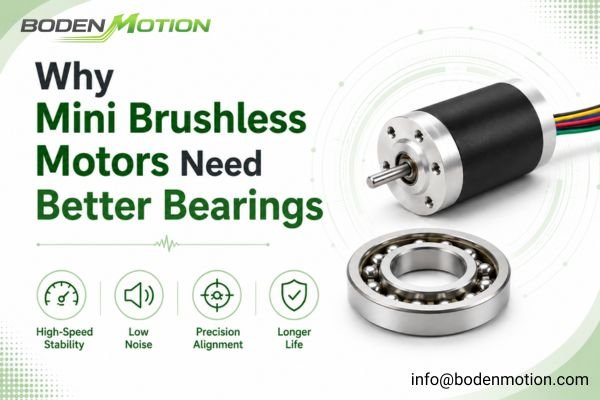
Your new device has a performance issue, but the mini brushless motor’s electrical specifications seem correct. The problem may lie in a component often treated as a simple commodity: the bearings. In miniature BLDC motors, bearings are a critical system component because they must manage high rotational speeds and tight assembly tolerances within a very […]
Does Higher RPM Increase Brushless DC Motor Cost?
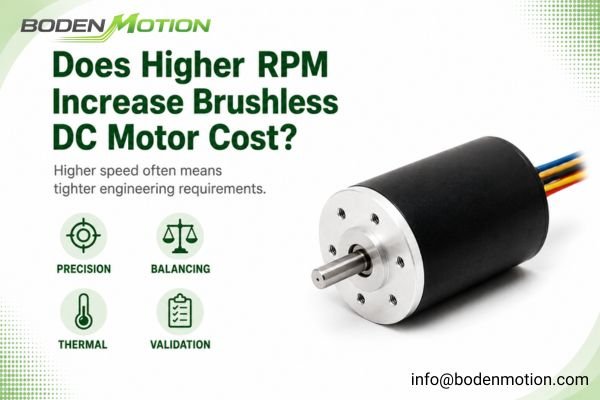
Many OEM teams assume that increasing a brushless DC motor ‘s speed is a simple change, often leading to unexpected costs and integration problems. The reality is more complex. Higher RPM can increase motor cost, but not because of the speed value itself. The cost rises when the required speed creates stricter requirements for bearings, […]
Why Are the Smallest Brushless Motors So Difficult to Design?
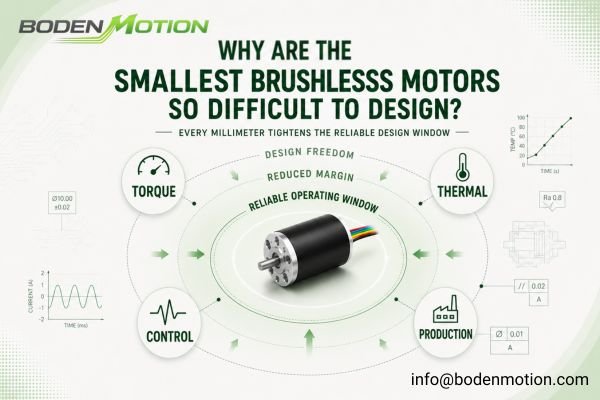
As OEM devices shrink, the challenge is not simply finding a smaller motor—it is maintaining reliable performance as the available engineering margin disappears. The smallest brushless motors are difficult to design because miniaturization reduces the space available for torque-producing components, heat management, sensors, bearings, and manufacturing tolerances at the same time. The real question is […]
Low Voltage Brushless DC Motor vs 12V BLDC Motor
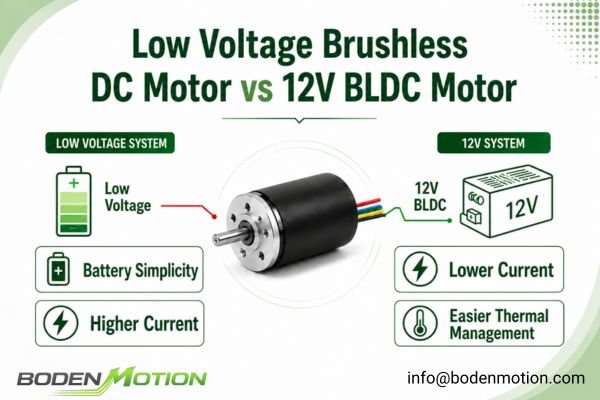
Choosing a motor’s operating voltage defines the electrical and thermal trade-offs for the entire motion system. This decision is especially important in compact OEM devices where space, power, and reliability are tightly constrained. For similar delivered power and comparable system efficiency, a lower bus voltage generally requires higher bus current. This relationship (Power ≈ Voltage […]
Why Cheap Mini BLDC Motors Fail Early?
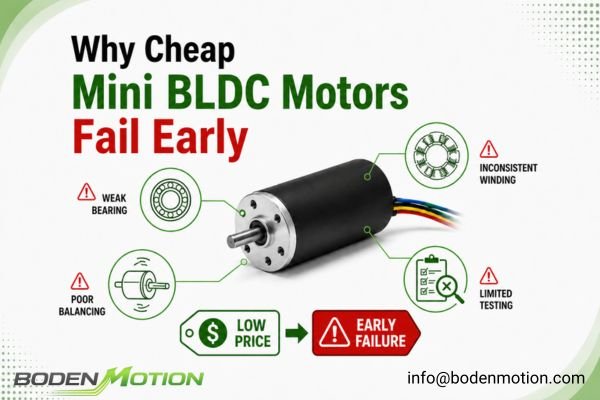
A low-priced motor may look acceptable on a datasheet and in initial samples. However, the real test comes during mass production and long-term field operation, where early failures can manifest as rising noise, vibration, speed instability, or overheating. Cheap mini BLDC motors can fail early when the cost reduction is achieved by compromising critical quality […]
Why Small Brushless Motors Fail During Startup?
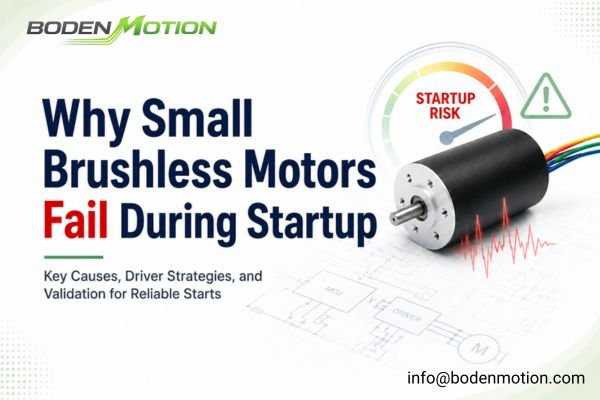
A small brushless motor may run normally after reaching speed but still fail during startup, when high current demand, static friction, load inertia, and driver control difficulty occur at the same time. This issue is common in compact automation modules, small pumps, fans, robotic joints, and battery-powered devices where torque margin is limited and load […]
Why Miniature Brushless DC Motors Need PWM Speed Control?
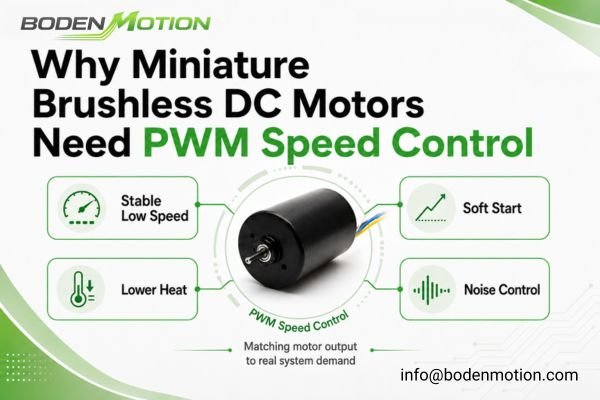
Your new device requires precise, stable motion, but the miniature brushless DC motor you’ve selected is either unstable at low speeds or generates too much noise. For many miniature brushless DC motor applications, PWM speed control becomes important when the system requires adjustable speed, controlled startup, low-speed stability, or better thermal management. While not every […]
Why Mini BLDC Motors Need Better Dynamic Balancing?
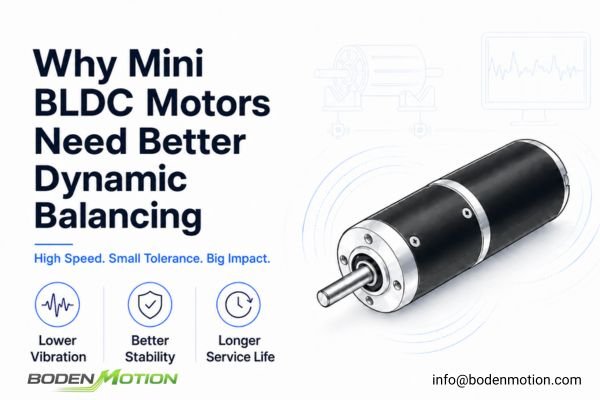
Miniature BLDC motors often operate at high speeds where even tiny rotor imbalances generate significant vibration. What seems like a minor manufacturing deviation can become a major source of noise, wear, and system instability. Dynamic balancing is critical for mini BLDC motors because it minimizes the vibration and noise caused by high-speed rotation, ensuring the […]
How Small BLDC Motors Are Tested Before Shipment?
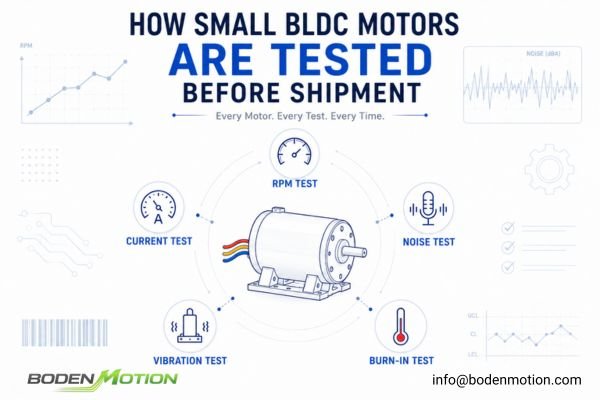
OEMs often rely on datasheets, but production variations can lead to field failures. A motor’s true quality is only revealed through rigorous, documented factory testing before it ships. Small BLDC motors are tested for RPM, current draw, noise, vibration, and thermal stability to verify performance, identify manufacturing defects, and ensure batch-to-batch consistency for OEM production […]